
Humanscale, a leader in human-centered design and manufacturer of ergonomic workplace products, has announced the release of its 2025 Corporate Social Responsibility Report, offering a transparent account of the company’s progress toward its goal of having a net positive impact on the world.
In a year shaped by shifting tariffs, evolving global supply chains, and major operational changes, the report underscores a central principle behind Humanscale’s approach to sustainability: meaningful progress is rarely linear.
Rather than focusing solely on long-term pledges or headline achievements, Humanscale reports against annual, measurable goals, and openly accounts for areas where targets were not met. The 2025 report details progress and challenges across healthy materials, circularity, water conservation, social responsibility, climate and energy, wildlife preservation, and supply chain accountability.
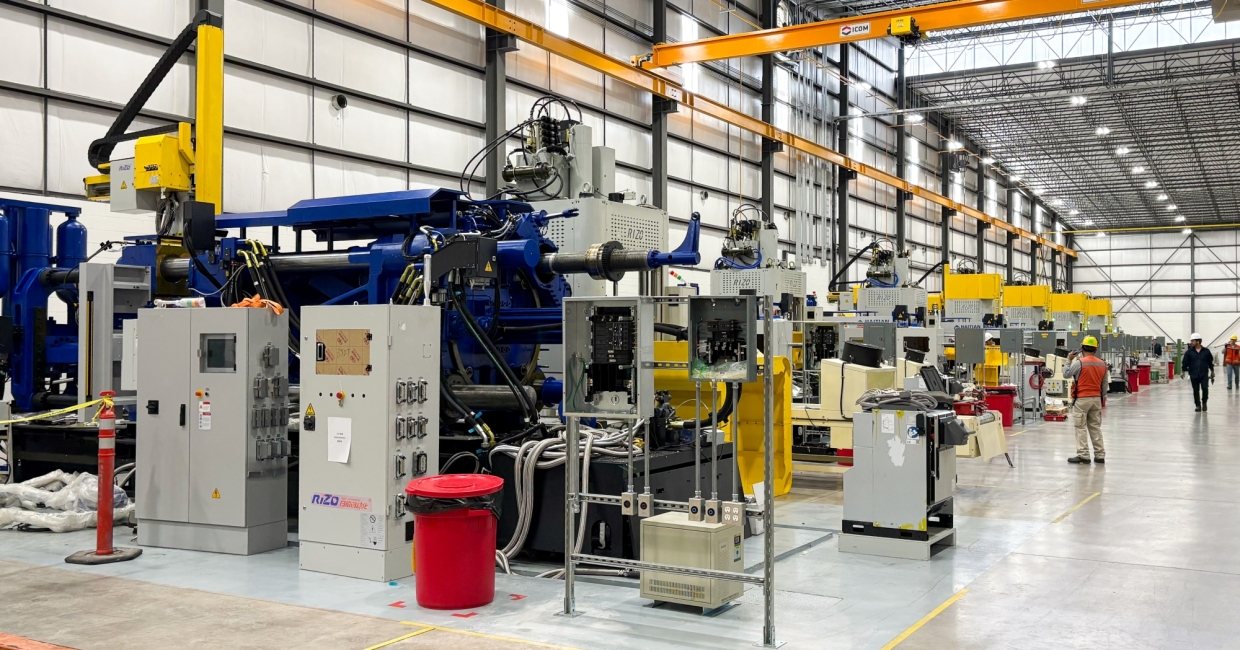
Central to Humanscale’s sustainability strategy in 2025 was an expansion of insourcing, bringing additional manufacturing processes, including injection molding and die casting, in-house. Greater control over manufacturing allows Humanscale to use more efficient equipment, build direct relationships with material suppliers, and, in certain cases, shorten supply routes. Humanscale’s electric injection molding machines, for example, replace hydraulic systems commonly used throughout the industry, reducing energy intensity per component.
The transition also illustrates the complexity of measuring sustainability progress. Energy use previously attributed to supplier facilities now appears within Humanscale’s own operational footprint, contributing to an increase in directly reported energy use in 2025. However, the company expects insourcing to reduce impacts elsewhere through more efficient equipment and reduced transportation, leading to an overall reduction in energy use. This is particularly significant given that Humanscale’s factories, offices and showrooms account for less than 10% of its climate impact, while its supply chain represents approximately 65–70%.
Across its 2025 goals, Humanscale continued to make measurable progress. Its factories achieved 91% waste diversion as manufacturing capabilities expanded and the workforce doubled, representing 97% completion against its 94% target. The company also developed infrastructure to scale its circularity program, with commercial sales of previously owned products expected to launch in 2026, and hosted volunteer initiatives across six communities globally.
Humanscale also openly reports where targets were not met. Goals related to PVC elimination, wildlife-related supply chain mapping and supplier participation in Science Based Targets were not completed in 2025, while its supplier audit target reached 70% completion. Changes associated with insourcing also meant the company did not achieve planned reductions in factory energy use and greenhouse gas emissions. These results will help establish priorities for continued progress in 2026.
Beyond reducing its footprint, Humanscale measures positive environmental outcomes through “handprints,” which account for benefits that would not otherwise have occurred. In 2025, the company expanded these efforts through renewable energy projects benefiting communities across the United States. Working with organisations including RE-volv and Resonant Energy, Humanscale sponsored solar installations for nonprofits and community organisations in California, Arizona and Massachusetts.
The report builds on nearly two decades of sustainability initiatives, including establishing its Net Positive vision in 2014, achieving the full Living Product Challenge for a product in 2016, introducing reclaimed ocean plastic into its seating portfolio in 2018, eliminating PFAS from Humanscale-designed and manufactured products in 2020, achieving TRUE Zero Waste certification across its global factories in 2022 and becoming the first and only major U.S. commercial furniture brand to achieve B Corp certification in 2024.
“Sustainability is rarely linear. At Humanscale, our commitment remains steady,” say Bob King, Founder of Humanscale. “We believe progress comes from thoughtful design, transparent measurement and the willingness to confront complexity rather than avoid it. By staying focused on continuous improvement and responsible innovation, we move closer each year to our goal of leaving the world better than we found it.”
Looking ahead, Humanscale’s 2026 goals include launching commercial sales of previously owned products, achieving 95% waste diversion across its factories, developing a packaging reduction strategy, expanding community volunteering, increasing supplier environmental and social audits, and continuing progress toward its Science Based Targets.