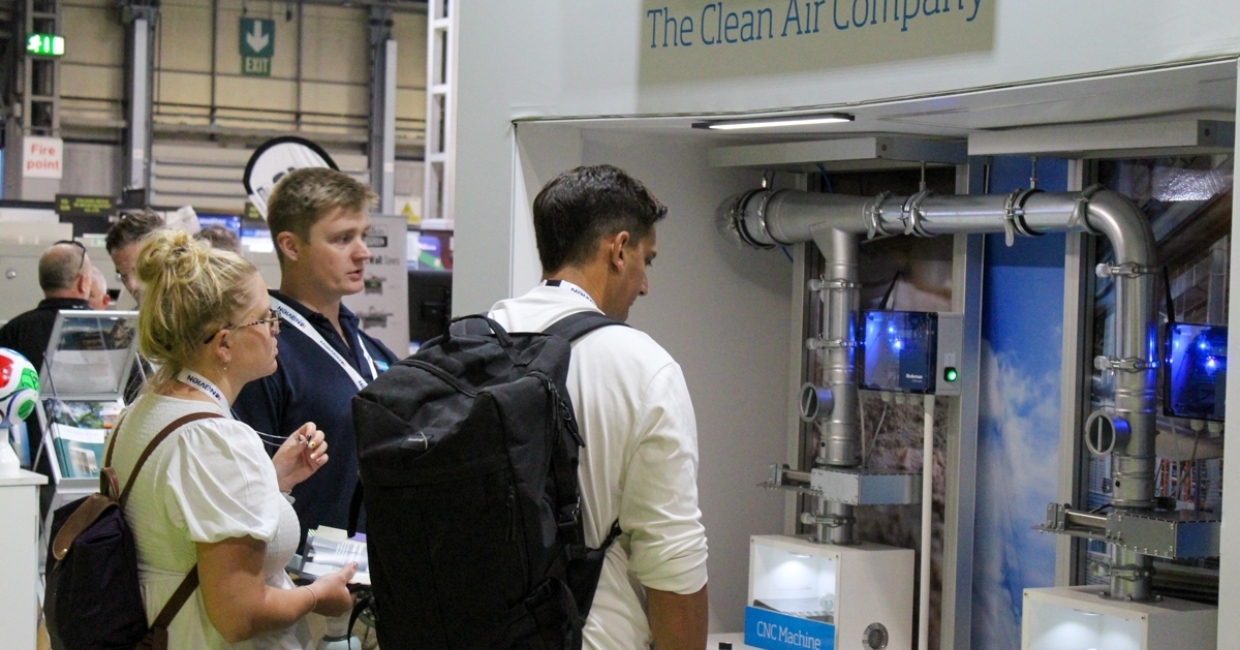
Every show produces its share of conversations about products; what’s new, what’s changed, what the competition is doing. Across three days on the exhibition floor, Nederman noted the same themes surfacing repeatedly from businesses of varying sizes, from different corners of the sector, at different stages of their operational maturity. What emerged was a clear picture of where dust control currently sits as a priority in UK wood industry, and where the gaps are.
1. Energy costs have changed the conversation around extraction
For the better part of a decade, the primary driver for investing in more sophisticated extraction systems was compliance. LEV, COSHH, DSEAR, the regulatory framework has gradually pushed manufacturers toward more formal approaches to dust control. But at this year’s show, energy cost was the opening line in many of our conversations, not compliance.
Businesses have absorbed significant increases in electricity cost over recent years, and for operations running centralised extraction continuously, those increases are felt acutely. What struck us was how frequently this led to interest in demand-controlled extraction. Systems that modulate extraction requirement in response to actual process demand, rather than running at full capacity regardless of what’s happening on the production floor.
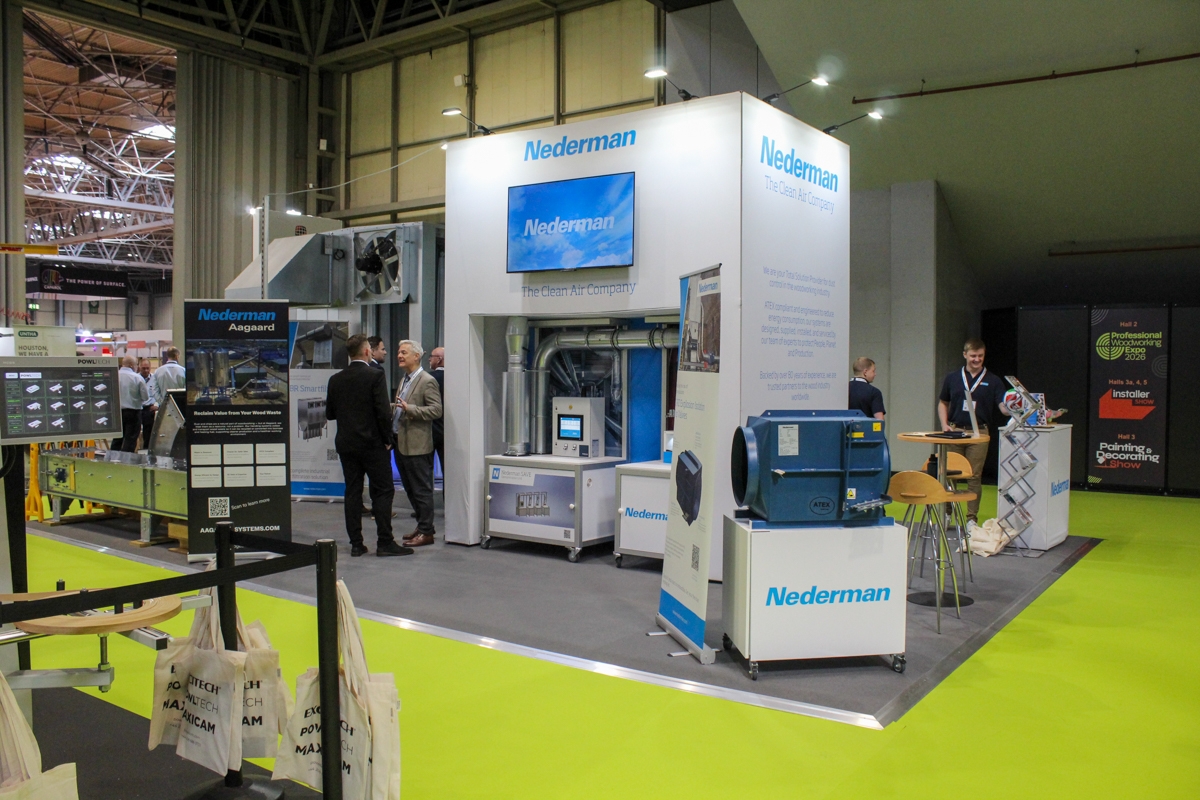
Nederman SAVE is our engineered response to exactly this challenge. By monitoring production in real time and adjusting extraction accordingly, systems that include SAVE have demonstrated measurable reductions in energy consumption across a range of manufacturing environments. For businesses where extraction runs across multiple shifts, the cumulative saving is significant.
The important shift here is that energy efficiency is no longer an additional benefit of a good extraction system, it’s becoming a primary investment case in its own right.
2. Waste is no longer just a disposal problem; it is a cost line
Several businesses we spoke with were paying regularly to dispose of their wood waste. It was simply part of how they operated. Material comes off the machine, it goes in the skip, the skip gets collected. Increasingly, though, that model is being questioned, not just on environmental grounds, but on financial ones.
Briquetting and waste conveying came up in several conversations at the show. The interest wasn’t academic, it was driven by businesses that had done the arithmetic and realised that the volume of waste they were generating had a recoverable value, either as compressed fuel for biomass heating or as a product that could be sold or reused in other areas of the business (heating) rather than simply disposed of.
The economics of briquetting are straightforward: the upfront investment in equipment is offset over time against the elimination or reduction of skip hire costs, and in some cases against the value of the briquettes themselves. For businesses with sufficient throughput, the payback period is well within what most operations would consider commercially reasonable.
Some businesses use the recirculated air from their extraction process to heat their facility but briquetting to create high-density fuel for wood burning stoves, biomass boilers and workshop heaters is something that turns waste into energy, or additional profit.
What this tells us is that waste management is entering the conversation earlier in the process. Not as an afterthought to extraction system design, but as a parallel consideration. For manufacturers looking at any significant system investment, it’s worth asking the question before the system components are specified.
3. Many businesses have outgrown the systems they built early on
This was perhaps the most common underlying theme across the show; businesses whose extraction infrastructure had simply not kept pace with the operation around it.
The pattern is recognisable. A business starts with one or two machines, installs local extraction to deal with immediate compliance or hygiene requirements, then adds capacity over time. Each addition gets its own unit or gets connected into a system that was never designed to carry the load it’s now being asked to manage. The result is a patchwork of equipment. Some of it redundant, some of it underperforming, held together by incremental decisions rather than any coherent system design.
Retrofit and capacity enquiries at the show reflected this reality. Decision-makers know their current setup isn’t right, but the path to improvement isn’t always obvious when the existing infrastructure is already embedded in the building.
This is where a turnkey approach has genuine practical value. Rather than specifying additional units to patch an existing system, the right starting point is a thorough assessment of what the operation actually requires, current and future, and designing from that baseline. In many cases, a properly designed centralised system replaces several independent units, simplifies maintenance, and delivers better performance at a lower running cost than the sum of the parts it replaces.
The businesses that benefit most are those able to look at the whole picture, rather than the next incremental fix.
4. Compliance blind spots are more common than the industry might assume
Not every business at the show had a system in place. Some were at the very beginning of the conversation. Operators who had grown their business without having dust control formally or adequately assessed.
It was also notable, that this wasn’t confined to the smallest or simplest operations. Established manufacturers were among those who acknowledged that their last formal assessment was longer ago than it should be, predating changes to their process, their materials, or their output.
One conversation stood out. A business working with wood had been operating for several years without realising that the dust from their process could bring them within scope of ATEX regulations. The framework governing environments where combustible dust presents an explosion risk. This is not a niche or theoretical concern in timber processing: fine wood dust is classified as combustible, and sites generating it are required to have a DSEAR risk assessment in place.
The ATEX conversation is worth having in any woodworking environment, regardless of size or perceived risk level. The question is not whether combustible dust is present, it almost certainly is, but whether it is being generated, handled, and extracted in a way that accounts for the risk that creates.
HSE guidance on this is clear. The responsibility for determining whether ATEX applies and for managing the risk if it does sits with the employer. A site assessment from an experienced engineer will quickly establish whether the current setup is adequate or whether further steps are required.
5. Awareness of the right solution is ahead of investment readiness
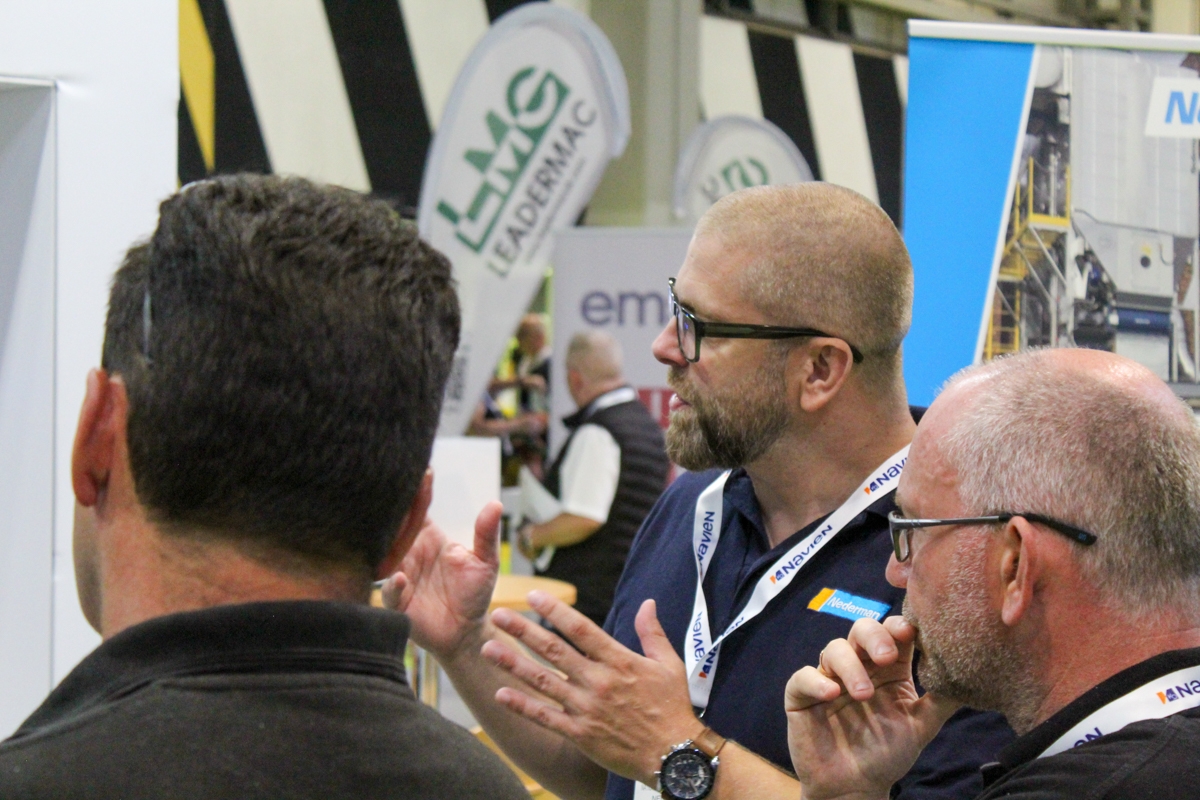
The final theme is perhaps the most telling and the most commercially nuanced. Several conversations at the show followed a clear pattern: a decision-maker who understood, broadly, what good dust control looked like for their operation, but who was not yet in a position, or not yet persuaded, to commit the budget required to achieve it.
This isn’t a new dynamic in capital equipment markets. But it is worth naming honestly, because it shapes how businesses should think about the decision in front of them.
The cost of a properly specified extraction system is real, and for many businesses it represents a meaningful capital commitment. But the cost of the alternative; reactive maintenance, energy inefficiency, skip hire, regulatory exposure, and the operational disruption of a system that isn’t performing is also real and that is not to mention the risk of explosion and threat to life in some cases. It is simply distributed differently, arriving in smaller amounts over a longer period, and therefore easier to absorb without interrogating the total.
The businesses that make the most commercially sound decisions on extraction investment are typically those that have modelled the full picture: capital outlay, running cost, maintenance cost, energy cost, and the value of risk avoided. Presented in those terms, the investment case for a well-designed system is often stronger than it first appears.
What good looks like
The conversations at this year’s show reinforced something we see consistently across manufacturing: the gap between what a business is currently doing and what best practice looks like is rarely as wide as the upfront cost of closing it makes it seem.
A properly designed extraction system, one that accounts for current process, future capacity, energy efficiency, waste recovery, and compliance, is an asset that delivers returns across several dimensions simultaneously. The energy it saves, the waste it recovers, the maintenance it avoids, and the regulatory exposure it eliminates all have measurable financial value.
The starting point is always the same: a specialist assessment of the operational requirement, from people who understand how to design, install, and support it.
That is what Nederman does. Nederman is a turnkey provider of industrial air filtration and extraction systems, operating across the UK. To arrange a site assessment, contact the UK team directly.