Paint costs are a significant part of finishing budgets for joinery manufacturers. And many businesses are looking for ways to improve efficiency without compromising finish quality or long-term performance.
One area which is often overlooked is paint consumption during application. In practice, many manufacturers are using more paint than is required, without questioning it.
Why over-application is more common than expected
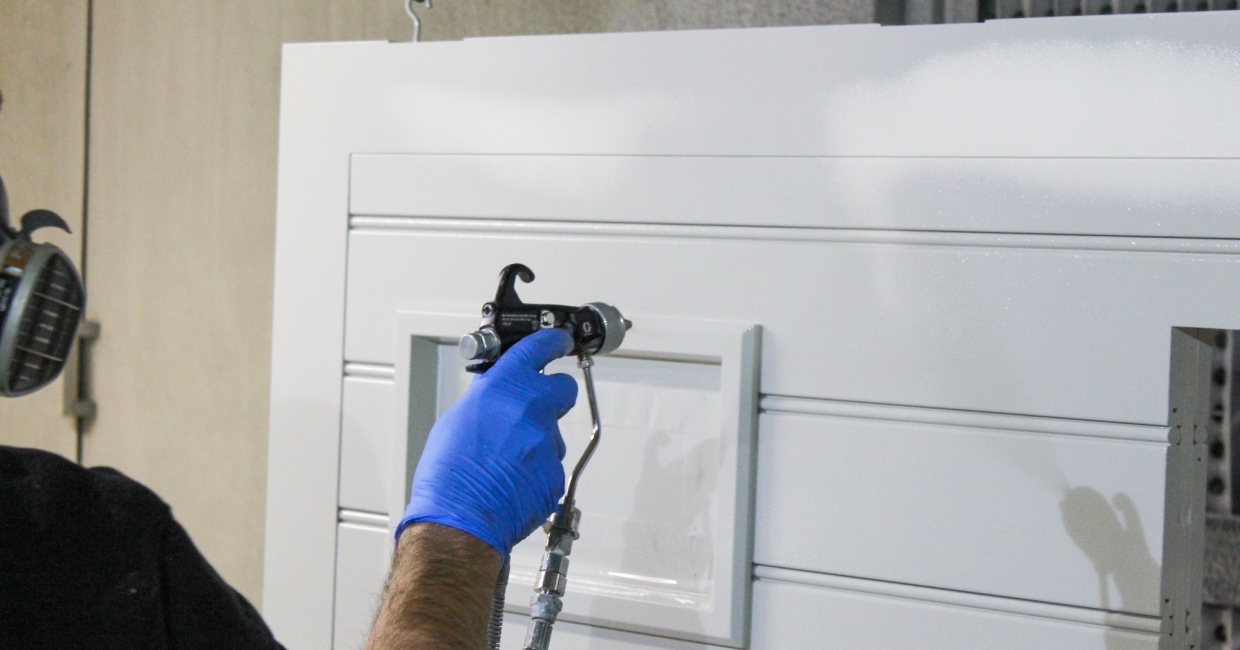
Worn / incorrect spray tips, inconsistent pump settings, sub-optimal spray technique and low paint temperatures can all lead to film builds being higher than is necessary.
And excessive film thickness can result in:
- Higher paint consumption
- Longer curing times
- Increased risk of defects
- Variation in finish quality
How to identify if you’re using too much paint
Many manufacturers rely on visual checks alone. While experience is valuable, it is not always enough.
One simple measurement will quickly highlight inefficiencies: Wet film thickness.
During application you should regularly use a wet film gauge to measure the thickness of the applied coating. It’s also good practice to check different areas of the joinery, as there will often be variation is film thicknesses across the piece.
Comparing these measurements to the coating manufacturer’s recommendations will reveal whether too much material is being applied.
Technical know-how applied on site
Reducing paint consumption is all about applying technical know-how in real production environments.
When Teknos’ technical experts visit joinery manufacturers, they support you by:
- Measuring wet film thicknesses
- Reviewing spray technique
- Identifying worn components, such as spray tips
- Optimising pump settings and application parameters
These are practical steps which can be implemented quickly and deliver immediate results.
When film build is brought back into the optimal range, manufacturers typically see:
- Reduced paint consumption per component
- More consistent finishes
- Faster curing times (particularly noticeable in winter months)
Importantly, correct application also ensures coatings perform as designed over their full service life, providing the expected protection and appearance.
Why close collaboration matters
Teknos believes making these changes are most effective when technical support is delivered on site, in close collaboration with operators.
Working like this allows the technical experts to see what is actually happening in the spray booth, rather than relying on assumptions or remote troubleshooting. This approach helps identify small process changes which can have a significant impact on cost, quality, and long-term performance.
Looking for more technical support?
Check out the free Teknos Technical Library here.